
WellnessPublished Mar 6, 2026Updated Sep 27, 202612 min read
Best Printable Puzzles for Seniors
Create wellness— free, no account, PDF + answer key



Why are puzzles good for seniors?
Regular puzzle-solving is associated with sharper short-term memory, better executive function, and lower rates of cognitive decline in older adults. A landmark 2019 study from the University of Exeter, following 19,078 adults aged 50-93 over 7 years, found that frequent word-puzzle solvers performed equivalent to being 8-10 years younger on short-term memory tests and 10 years younger on grammatical-reasoning tests.
The cognitive mechanism is neuroplasticity — the brain's ability to strengthen existing neural pathways and form new ones through repeated, varied challenge. Brain games for seniors — crosswords, sudoku, word searches, and matching worksheets — hit working memory, vocabulary retrieval, logical deduction, and visual pattern recognition simultaneously, which is why no single supplement or activity has comparable effect size. Critically, the effect is dose-dependent: the more frequent the puzzling, the larger the cognitive-age gap. For seniors, 20-30 minutes of daily varied puzzling (rotating cognitive puzzles for older adults across crosswords, sudoku, and word searches) is a research-supported target. Start with Puzzone's free printable puzzles for elderly users and senior activity worksheets.
The cognitive mechanism is neuroplasticity — the brain's ability to strengthen existing neural pathways and form new ones through repeated, varied challenge. Brain games for seniors — crosswords, sudoku, word searches, and matching worksheets — hit working memory, vocabulary retrieval, logical deduction, and visual pattern recognition simultaneously, which is why no single supplement or activity has comparable effect size. Critically, the effect is dose-dependent: the more frequent the puzzling, the larger the cognitive-age gap. For seniors, 20-30 minutes of daily varied puzzling (rotating cognitive puzzles for older adults across crosswords, sudoku, and word searches) is a research-supported target. Start with Puzzone's free printable puzzles for elderly users and senior activity worksheets.
Do puzzles help prevent dementia?
Honest answer: puzzles do not prevent dementia outright, but they are associated with slower cognitive decline and may delay the onset of symptoms in adults at risk. The cognitive benefits of crossword puzzles, sudoku, and other word-and-number puzzles are real but modest — and strongest when paired with other healthy-aging behaviors.
A 2021 meta-analysis in JAMA Network Open reviewed 58 studies and found that engagement in cognitively stimulating activities (including puzzles, reading, and board games) was associated with a 17-30% reduction in risk of incident dementia over 4-7 year follow-up periods. The effect is real but modest — puzzles are one of many protective factors, alongside social engagement, physical exercise, sleep quality, and cardiovascular health. Brain games for Alzheimer's patients and people with mild cognitive impairment work the same way: they cannot reverse disease progression, but they can sustain function for longer.
What puzzles do reliably do: maintain short-term memory and attention at a higher functional level than absence of cognitive activity, and act as puzzles that improve memory at the moderate end of effect size. This matters enormously for quality of life, independence, and daily function even when dementia risk is unchanged. Cognitive stimulation activities for elderly users — daily brain training puzzles printable from a quality source, paired with social interaction — are the recommended practice for both healthy seniors and those with mild dementia. For more depth, see the upcoming Puzzone guide on the science behind puzzles and brain health and our deeper take on puzzles and dementia prevention research.
A 2021 meta-analysis in JAMA Network Open reviewed 58 studies and found that engagement in cognitively stimulating activities (including puzzles, reading, and board games) was associated with a 17-30% reduction in risk of incident dementia over 4-7 year follow-up periods. The effect is real but modest — puzzles are one of many protective factors, alongside social engagement, physical exercise, sleep quality, and cardiovascular health. Brain games for Alzheimer's patients and people with mild cognitive impairment work the same way: they cannot reverse disease progression, but they can sustain function for longer.
What puzzles do reliably do: maintain short-term memory and attention at a higher functional level than absence of cognitive activity, and act as puzzles that improve memory at the moderate end of effect size. This matters enormously for quality of life, independence, and daily function even when dementia risk is unchanged. Cognitive stimulation activities for elderly users — daily brain training puzzles printable from a quality source, paired with social interaction — are the recommended practice for both healthy seniors and those with mild dementia. For more depth, see the upcoming Puzzone guide on the science behind puzzles and brain health and our deeper take on puzzles and dementia prevention research.
What are the best puzzles for seniors?
Top five puzzle types ranked by cognitive value and accessibility for adults 60+:
Avoid puzzles that create frustration for the specific individual — failure feels worse than for younger solvers and can create avoidance of all puzzles. Match difficulty to current capability and rotate formats to prevent boredom.
- Crosswords. Best for vocabulary recall, general knowledge retrieval, and linguistic fluency. The gold standard for senior brain activity. Large-print versions address the most common accessibility barrier (visual acuity).
- Sudoku. Best for logical deduction and working memory. No vocabulary or cultural knowledge required, which makes it accessible regardless of education or language background. Available in easy, medium, and hard at Puzzone.
- Word searches. Lower cognitive load than crosswords; excellent for low-energy days or early dementia. Reinforces pattern recognition and sustained attention.
- Matching worksheets. Fast, satisfying, and confidence-building. Good for cognitively limited seniors — objective correctness without the frustration of recall failures.
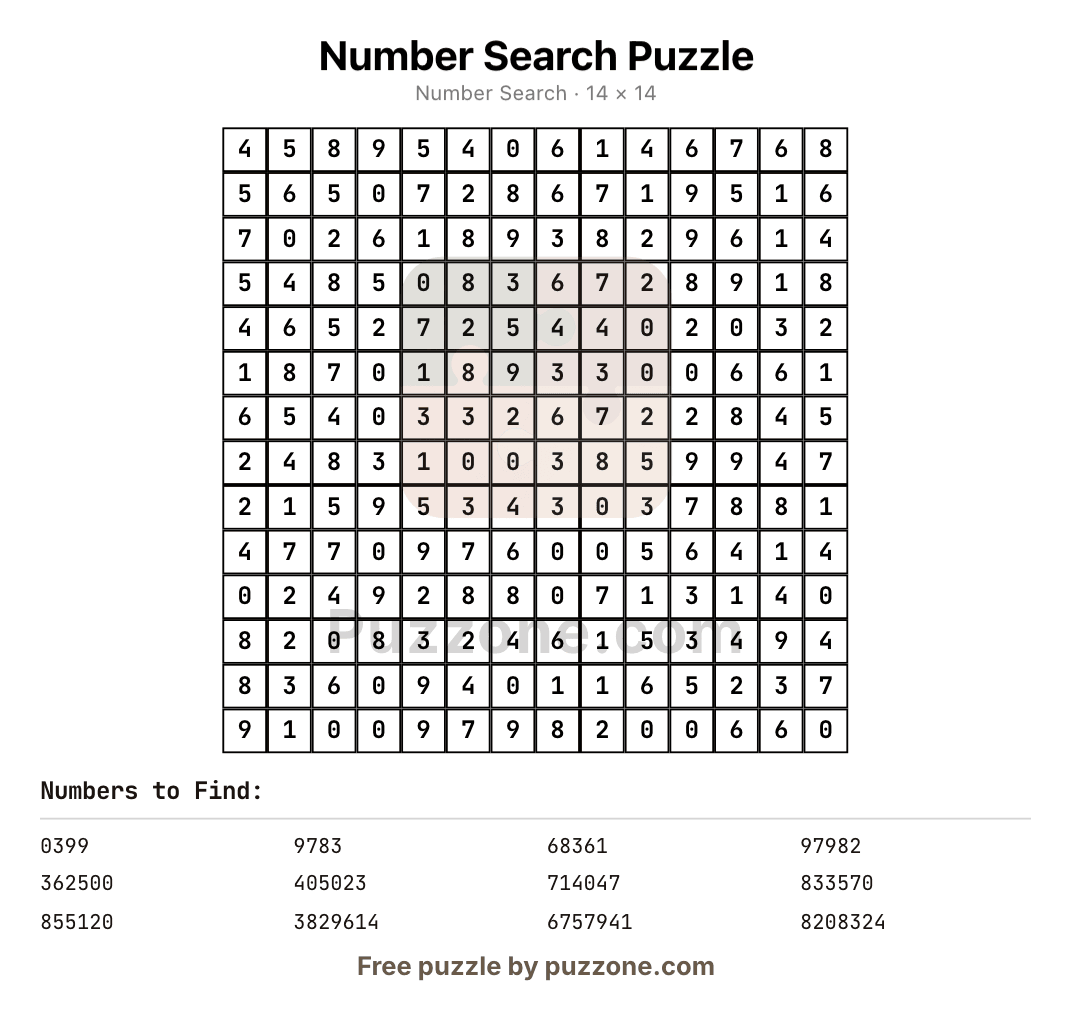
- Number searches. Same format as word searches but with numbers instead of letters. Strong alternative for seniors with aphasia or language difficulty; purely visual pattern matching.
Avoid puzzles that create frustration for the specific individual — failure feels worse than for younger solvers and can create avoidance of all puzzles. Match difficulty to current capability and rotate formats to prevent boredom.
What makes a puzzle accessible for seniors?
Three accessibility factors determine whether a senior will actually solve puzzles regularly rather than abandon them:
Secondary factors: paper weight (heavier paper is easier to handle for arthritic hands), binding style (spiral or stitched, not perfect-bound, for books that lie flat), and reasonable size (8.5×11 inches rather than 6×9 for better visibility).
The table below matches puzzle type and accessibility settings to the most common senior needs:
- Font size and print quality. Large print (16-18pt minimum for puzzles, 20pt+ for severely vision-impaired) is non-negotiable. Standard 10-12pt fonts cause eye strain within 5-10 minutes and drive abandonment. Puzzone's large-print puzzle options generate oversized grids and clue text.
- High contrast. Black text on white or off-white paper. Avoid gray text or low-contrast backgrounds. Shaded grid cells (like sudoku 3×3 box indicators) should be very light gray, not medium gray.
- Uncrowded layout. Generous white space, clear separation between clues and puzzle, page numbers large enough to navigate. A senior with arthritis should be able to hold the paper and read without repositioning.
Secondary factors: paper weight (heavier paper is easier to handle for arthritic hands), binding style (spiral or stitched, not perfect-bound, for books that lie flat), and reasonable size (8.5×11 inches rather than 6×9 for better visibility).
The table below matches puzzle type and accessibility settings to the most common senior needs:
| Senior profile | Best puzzle type | Font size | Grid size | Session length |
|---|---|---|---|---|
| Cognitively healthy, mild vision loss | Crossword or sudoku | 16-18pt | Medium (15×15 crossword, standard sudoku) | 20-30 min |
| Moderate vision impairment | Large-print sudoku or word search | 20-24pt grid numbers | Oversized 9×9 or 10×10 word search | 15-25 min |
| Severe vision impairment | Number search or matching | 24pt+ | 8×8 or simpler | 10-15 min |
| Mild cognitive impairment | Simple themed word search | 18pt | 10×10, 10 words, H+V only | 10-15 min |
| Early-stage dementia | Matching worksheet with familiar content | 18-20pt | 6-8 pairs | 5-10 min per session |
| Aphasia / language difficulty | Number search or maze | 20pt+ | Medium | 10-15 min |
| Arthritis (pencil-hold difficulty) | Matching or easy word search | 18pt+ | Wide-spaced grids | 10-15 min |
How long should a senior spend on puzzles each day?
Research supports 20-45 minutes of varied puzzling per day for maximum cognitive benefit without producing fatigue. Below 15 minutes, effects are inconsistent. Above 60 minutes, additional benefit plateaus and mental fatigue can set in.
Optimal session structure for a cognitively healthy senior:
For seniors in memory care or with mild cognitive impairment, shorter sessions (10-15 min × 2-3 per day) work better than longer single sessions. The goal is sustainable daily practice, not cognitive endurance training.
Optimal session structure for a cognitively healthy senior:
- Morning: one crossword (15-25 min). Morning cognition is strongest; save the vocabulary-heavy puzzle for when you're sharpest.
- Afternoon: one sudoku or kakuro (15-20 min). Logic puzzles work well post-lunch when vocabulary recall fatigue has set in.
- Evening (optional): light word search or matching worksheet (10 min). Low-demand puzzles work before bed without causing overstimulation.
For seniors in memory care or with mild cognitive impairment, shorter sessions (10-15 min × 2-3 per day) work better than longer single sessions. The goal is sustainable daily practice, not cognitive endurance training.
What puzzles work for seniors with vision impairment?
Vision is the most common accessibility barrier for seniors over 70. Three adaptations dramatically improve puzzle accessibility:
For seniors with macular degeneration or cataracts, pair puzzles with a magnifying sheet or large-display screen viewer. For totally blind seniors, audio-based puzzles (described crosswords) exist but are a different format. Puzzone's generators optimize for the common case: seniors with mild-to-moderate visual decline who can still read with help from larger text.
- Large-print format. 18pt minimum for text, 24pt+ for grid numbers in sudoku. Puzzone's large-print generator produces oversized PDFs with all these adaptations built in.
- Oversized grids. A standard 9×9 sudoku grid on letter paper has small cells. A "large print sudoku" uses the same grid size but each cell is 2-3× larger, with bigger numbers and wider line spacing.
- Simpler puzzle types. Word searches with 10×10 grids and 10 words are more accessible than complex 20×20 word searches with 30+ words.
For seniors with macular degeneration or cataracts, pair puzzles with a magnifying sheet or large-display screen viewer. For totally blind seniors, audio-based puzzles (described crosswords) exist but are a different format. Puzzone's generators optimize for the common case: seniors with mild-to-moderate visual decline who can still read with help from larger text.
What puzzles for dementia patients work in early-stage cognitive decline?
Puzzles for dementia patients in early-stage decline or with mild cognitive impairment should prioritize success and engagement over challenge. A puzzle that produces repeated failure creates avoidance and emotional distress. A puzzle at the right level produces calm focus and small satisfaction. The same selection principle applies whether you're providing puzzles for dementia patients at home, in adult day programs, or in memory care.
Best puzzle types for dementia-friendly use:
Avoid: crosswords (require significant word retrieval), kakuro (addition is often the first skill to decline), nonograms (too cognitively demanding). For activity directors at memory-care facilities, a rotation of 5-6 simple word searches + 3-4 matching worksheets per week is a sustainable program.
Best puzzle types for dementia-friendly use:
- Simple word searches with themes that match the person's interests (gardening, cooking, classic movies, hometown geography). Small grids (10×10), short word lists (8-12 words), horizontal and vertical only.
- Easy sudoku — only if the person had prior sudoku experience. Otherwise skip (teaching sudoku to someone with dementia is usually frustrating).
- Matching worksheets with familiar content (matching animals to their sounds, historical figures to their eras, states to their abbreviations).
- Number searches — no vocabulary required, purely visual pattern matching. Often works even when language-based puzzles become too difficult.
Avoid: crosswords (require significant word retrieval), kakuro (addition is often the first skill to decline), nonograms (too cognitively demanding). For activity directors at memory-care facilities, a rotation of 5-6 simple word searches + 3-4 matching worksheets per week is a sustainable program.
How can family members use puzzles with senior loved ones?
Puzzle-sharing is one of the most underrated activities for multi-generational bonding. Four productive formats:
Generate custom themed puzzles using Puzzone's word search maker or crossword maker — add your own word list (hometown street names, family member names, favorite foods) for a deeply personal senior activity.
- Co-solve over coffee. Sit side by side with one crossword or word search. One person reads clues, the other fills in answers. Social + cognitive + bonding.
- Themed puzzles that surface memories. Generate a word search or crossword using the senior's familiar vocabulary — hometown, former profession, hobbies, favorite musicians. The act of recall becomes a memory-sharing prompt.
- Grandchild + grandparent puzzles. Generate a puzzle that's appropriately difficult for the grandchild and easy enough for the grandparent. They solve together. Creates shared activity across generations.
- Puzzle-of-the-day mail. Send a weekly packet of 5-7 puzzles by mail. Keeps in touch with distant seniors and provides structured weekly activity.
Generate custom themed puzzles using Puzzone's word search maker or crossword maker — add your own word list (hometown street names, family member names, favorite foods) for a deeply personal senior activity.
What about simple puzzles for nursing homes and memory care?
Activity coordinators at senior centers, assisted living facilities, and memory-care units need bulk puzzle supply at appropriate difficulty. A typical 50-resident facility runs 3-5 hours of group activity daily, much of it paper-based — and simple puzzles for nursing homes are one of the most-used resources in any activity binder.
Practical setup for an activity director:
Cost: $0 with Puzzone's free generators, just paper and toner. Most facilities spend $30-$80/month on commercial large-print puzzle books. Generating the same volume in-house is free.
For publishing a custom puzzle book for your facility (with branded cover), use the puzzle book creator to export a KDP-ready PDF.
Practical setup for an activity director:
- Print 30-40 puzzles per week covering multiple difficulty levels (easy through medium; avoid hard unless you have specific high-functioning residents).
- Rotate puzzle types: Monday crosswords, Tuesday word searches, Wednesday sudoku, Thursday matching, Friday themed puzzle bingo. Memory care activities work best when the same rotation runs each week so residents anticipate the next day.
- Use themed content tied to calendar events (spring puzzles in March, gardening in April, etc.) to provide conversational prompts during solving.
- Keep a binder of 5-10 "reliable favorites" puzzles that your residents consistently enjoy — regenerate fresh versions monthly.
- For residents recovering from stroke, use simple matching and easy word searches as part of structured cognitive exercises for elderly recovery — puzzles for stroke recovery are clinically supported as adjunct to OT/SLP therapy.
Cost: $0 with Puzzone's free generators, just paper and toner. Most facilities spend $30-$80/month on commercial large-print puzzle books. Generating the same volume in-house is free.
For publishing a custom puzzle book for your facility (with branded cover), use the puzzle book creator to export a KDP-ready PDF.
Where can I get free large-print puzzles for seniors?
Puzzone's free puzzle generators produce printable PDFs that accommodate senior accessibility needs across all 26 puzzle types. For maximum readability, use these settings:
All puzzle types are free with no account for personal and in-house use — facilities and family members can print as many copies as needed. For a curated multi-type activity book for a senior loved one, use the puzzle book creator (Premium) and export a personalized 50-100 page PDF.
Puzzone is the most complete free source online for dementia-friendly puzzles, large print puzzles, and senior activity worksheets — all of it generated on demand, with answer keys, and printable on standard letter or A4 paper.
- Large print crossword puzzles for seniors: medium or small grid size with large-print output toggle. Fewer but larger clues. Generate at the crossword creator.
- Large print sudoku for elderly solvers: the large-print option uses oversized cells with big numbers. Easy difficulty for beginners, medium for experienced players. Generate here.
- Easy word search for seniors: smaller grid (10×10) with 10-15 words, horizontal and vertical only. Avoid diagonals for cognitively impaired users. Generate here.
- Matching worksheets: 6-8 pairs per page at large font. Simple familiar content. Generate here.
All puzzle types are free with no account for personal and in-house use — facilities and family members can print as many copies as needed. For a curated multi-type activity book for a senior loved one, use the puzzle book creator (Premium) and export a personalized 50-100 page PDF.
Puzzone is the most complete free source online for dementia-friendly puzzles, large print puzzles, and senior activity worksheets — all of it generated on demand, with answer keys, and printable on standard letter or A4 paper.
Frequently asked questions
- Do puzzles actually help seniors' brains?
- Yes. A 2019 University of Exeter study of 19,078 adults aged 50-93 found that frequent word-puzzle solvers scored equivalent to being 8-10 years younger on short-term memory tests and 10 years younger on grammatical reasoning tests. Effects are dose-dependent — more frequent puzzling correlates with larger cognitive-age gaps. Puzzles do not prevent dementia but are associated with slower cognitive decline.
- What is the best puzzle for a senior beginner?
- Start with easy word searches (10×10 grid, 10 words, horizontal and vertical only). Word searches have the lowest cognitive load and highest success rate for beginners. After 2-3 weeks of daily word searches, introduce easy sudoku or simple crosswords. Match difficulty to current capability and success rate — aim for 80%+ completion on early attempts.
- How long should a senior spend on puzzles each day?
- 20-45 minutes of varied puzzling per day produces measurable cognitive benefits. Below 15 minutes, effects are inconsistent. Above 60 minutes, benefit plateaus and fatigue can set in. Best structure: one crossword in the morning (15-25 min), one sudoku or matching worksheet in the afternoon (15-20 min), optional light puzzle in the evening.
- What font size should senior puzzles use?
- 16-18pt minimum for clue text, 20-24pt for grid numbers in sudoku, and 18pt+ for word search grid letters. Standard 10-12pt fonts cause eye strain within 5-10 minutes for most seniors. Puzzone's large-print puzzle options generate oversized PDFs with all these specifications pre-set.
- Are puzzles appropriate for seniors with dementia?
- Yes, with appropriate selection. For early-stage dementia, simple themed word searches (matching the person's familiar interests), matching worksheets with familiar content, and easy number searches work best. Avoid complex crosswords, kakuro, and nonograms. The goal is success and engagement, not challenge — puzzles that produce repeated failure create avoidance.
- Where can I get free printable large-print puzzles?
- Puzzone generates free printable large-print puzzles at /create for all 26 puzzle types. No account and unlimited regeneration, so senior centers and assisted living facilities can print as many copies as they need for their residents. For a branded facility puzzle book, use the puzzle book creator at /create/book.
Try it yourself
Create wellness puzzles for free — no account needed.